Blog

  • Gold Enters the Infrastructure Era as SMX, trueGold, and Goldstrom Build the First Proof-Ready Metals Network

    Gold Enters the Infrastructure Era as SMX, trueGold, and Goldstrom Build the First Proof-Ready Metals Network

    NEW YORK, NY / ACCESS Newswire / November 14, 2025 / For centuries, gold has existed outside the world of modern infrastructure. Digital identity systems have evolved. Financial instruments evolved. Global logistics has evolved. Yet gold, the very foundation of sovereign reserves and private wealth, remained an analog asset defined by trust, certificates, and manual verification.

    That model is finally breaking.

    SMX (NASDAQ:SMX), through its majority-owned subsidiary trueGold, has introduced the first technology that allows gold to function like a verified asset inside a modern financial system. The breakthrough comes not from a database or barcode, but from the metal itself. A molecular signature is embedded directly into gold at the earliest stage of extraction. That signature stays with the material through refining, casting, vaulting, trading, and recycling. It cannot be removed or forged. It becomes part of the infrastructure that governs the asset.

    This shift is not theoretical. It is now operational.

    trueGold’s technology has attracted a new strategic partner: Goldstrom, a global precious-metals group with operations spanning secure logistics, vaulting, trading, bullion banking, and wealth advisory. Their collaboration integrates trueGold’s molecular certification system into Goldstrom’s operational pipelines, transforming how gold is authenticated as it moves through institutional markets.

    The combination forms a new infrastructure layer for the precious-metals economy. SMX provides the science. Goldstrom provides the scale. Together, they introduce a system in which verification is continuous and embedded, rather than external or discretionary.

    The Backbone of a Verified Metals Network

    trueGold’s platform consists of three elements: a molecular marker, a proprietary reader, and a digital registry that records each transfer. Once added, the chemical signature inside the gold becomes a permanent identity tag. It links physical matter to digital truth.

    Independent testing by Intertek confirmed the marker’s safety and neutrality under the AnchorCert Pro 2 protocol, validating compliance across the United States, Canada, and the European Union. It does not alter the metal. It does not affect purity. It does not disrupt manufacturing or design. It simply turns gold into a self-identifying asset.

    That capability now enters Goldstrom’s global footprint. Every movement through Goldstrom’s vaults, logistics centers, or banking channels can be tied to verified material identity. For the first time, a bullion ecosystem can operate with intrinsic proof instead of proxy documentation.

    The value becomes clear when applied at scale. Regulatory frameworks shift from assumptions to evidence. ESG claims become measurable instead of declarative. Wealth managers gain the ability to prove provenance for institutional clients. Traders can validate recycled content, purity, and custody with unprecedented precision.

    In a market where trust determines price, proof-based infrastructure is not a feature. It is an advantage.

    The Regulatory Signal That Changes the Sector

    The London Bullion Market Association has already recognized the significance of the technology by accrediting SMX’s molecular marker as a Gold Bar Security Feature. That endorsement is more than a technical milestone. It is an indicator that the world’s largest precious-metals authority accepts molecular proof as part of the authentication process.

    With Goldstrom adopting the system, the infrastructure gains a runway for global deployment. A vault in Zurich, a refinery in Dubai, or a trading house in Singapore can operate on a shared identity layer that travels with the gold itself. Compliance becomes simpler. Fraud becomes harder. Market confidence strengthens.

    And the timing aligns with global demand. IBM research shows that consumers are willing to pay substantial premiums for traceable products. PwC reports measurable margin expansion for verified sustainable sourcing. Those same behavioral patterns influence how bullion is valued, particularly among institutions that must justify ESG positions or provide transparent reporting.

    trueGold and Goldstrom are not asking the market to imagine a future version of accountability. They are building the infrastructure today.

    The Beginning of a Verified Financial Asset Class

    This partnership represents more than a technology integration. It signals the emergence of a proof-ready asset class for precious metals.

    Gold has always held value. Now it can verify that value. By embedding molecular identity directly into the metal and linking that identity to a secure digital registry, SMX and trueGold convert gold from an asset that relies on external trust into one that carries trust internally. Goldstrom extends that capability across global supply lines.

    What began as a scientific breakthrough at SMX is becoming a new architecture for how markets authenticate one of the world’s most important commodities. The vaults, transfers, trades, audits, and recycling streams all become synchronized through chemistry and digital certainty.

    In this new model, gold does not exist solely within the financial system. It becomes part of the system’s infrastructure. Proof is no longer something attached to an asset. It is something engineered into it.

    And in this case, and for the first time in its history, gold can prove itself.

    About SMX

    As global businesses face new and complex challenges relating to carbon neutrality and meeting new governmental and regional regulations and standards, SMX is able to offer players along the value chain access to its marking, tracking, measuring and digital platform technology to transition more successfully to a low-carbon economy.

    Forward-Looking Statements

    This editorial contains forward looking statements within the meaning of the Private Securities Litigation Reform Act of 1995, Section 27A of the Securities Act of 1933, and Section 21E of the Securities Exchange Act of 1934. Forward looking statements include expectations, projections, and assumptions about future events relating to SMX (NASDAQ:SMX), its majority-owned subsidiary trueGold, its partnership with Goldstrom, and the development and commercial expansion of molecular marking, digital registries, and supply chain verification technologies within the global precious-metals sector. These statements are not descriptions of historical facts. They are based on current beliefs, estimates, and assumptions that are inherently subject to risks, uncertainties, and factors that are difficult to predict.

    Forward looking statements in this editorial include, but are not limited to, expectations regarding the integration of trueGold’s molecular-marking technology into Goldstrom’s operational framework; the potential widespread adoption of SMX-enabled verification across vaulting, logistics, bullion trading, banking, and wealth management; anticipated improvements in gold authentication processes; the potential for SMX systems to be recognized or mandated by regulatory bodies, including the London Bullion Market Association and other global metals authorities; and the anticipated value that verified provenance, traceability, and lifecycle tracking may bring to market participants, investors, and institutional clients.

    These statements also encompass expectations about the potential scalability of SMX technology across refineries, recycling operations, manufacturing pipelines, and international metals markets; the ability of molecular identity markers to survive refining or remelting processes; the potential to enhance ESG reporting, sustainability claims, or compliance frameworks; and the possibility of establishing new economic models built on authenticated material identity. Forward looking statements further include assumptions about evolving consumer demand for transparent and traceable products; projected economic benefits from verified material flows; and the belief that proof-driven systems may influence commodity pricing, institutional adoption, and sector-wide operational standards.

    These statements are subject to numerous risks and uncertainties that could cause actual results to differ materially from those expressed or implied. Such risks include, but are not limited to: changes in regulatory requirements affecting precious-metals trading and authentication; fluctuations in global commodity markets; geopolitical conditions; competitive technological developments; the pace at which institutional actors adopt new verification systems; technical limitations in deploying molecular markers at industrial scale; risks associated with integrating new technologies into established supply chains; general economic conditions; and other risks detailed in SMX’s filings with the Securities and Exchange Commission, including its most recent Annual Report on Form 10-K and subsequent Quarterly Reports on Form 10-Q.

    Readers are cautioned not to place undue reliance on forward looking statements. These statements speak only as of the date of publication. SMX undertakes no obligation to update or revise forward looking statements to reflect subsequent events, changes in circumstances, or new information, except as required by applicable law.

    EMAIL: info@securitymattersltd.com

    SOURCE: SMX (Security Matters) Public Limited

    View the original press release on ACCESS Newswire
  • SMX Brings Global Supply Chains Into Its “Internet of Truth” Platform

    SMX Brings Global Supply Chains Into Its “Internet of Truth” Platform

    NEW YORK, NY / ACCESS Newswire / November 14, 2025 / Most technologies disrupt a single sector. A rare few create an entirely new layer that industries plug into. SMX (NASDAQ:SMX) is doing the latter. Its molecular-marking architecture is not simply validating materials. It is creating the world’s first “proof mesh,” a global network where plastics, metals, fibers, and commercial goods report their own histories without the need for declarations, audits, or guesswork.

    This mesh is forming through six strategic partnerships that turn verification into a structural function of global supply chains. Each partnership represents a different entry point. Each one expands the surface area where truth becomes automatic instead of asserted.

    What makes the moment remarkable is not the number of partners, but the coherence of the system they now share. For the first time, regulators, manufacturers, investors, and recyclers can operate within a shared layer of authenticated material identity.

    Singapore: The First Country to Wire Itself Into the Mesh

    SMX’s work with A*STAR in Singapore represents the clearest example of national integration. The collaboration is building a plastics passport system where resin does not “claim” its past. It carries it. Every processing step becomes a certified event, allowing recycling incentives, waste policies, and industrial reporting to function with real-time certainty rather than assumptions.

    Singapore is not running a circular-economy pilot. It is installing a backbone for verified material flow. Once complete, the country will operate the first nationwide proof mesh for plastics, setting a standard the world can study and adopt.

    Austria: Machines That Sort and Certify Simultaneously

    In Austria, SMX and REDWAVE are linking industrial automation directly into the proof mesh. Sorting machines traditionally separate materials by type. Now they can separate by identity. Molecular markers embedded in plastics allow REDWAVE systems to verify recyclate on the line.

    Instead of waiting for lab tests or documentation, manufacturers receive immediate confirmation. A facility becomes a self-auditing environment. Quality becomes measurable in motion, not on paper.

    When coupled with Tradepro’s distribution network in Miami, verified resin moves from European sorting lines to American supply chains with a clear, auditable trail that satisfies tightening U.S. recycled-content mandates.

    Spain: Turning Industrial Pilots Into Proof Engines

    CARTIF in Spain is positioning Europe’s circular economy for its next stage of implementation. Through its collaboration with SMX, the research center is embedding molecular identification into industrial testbeds that serve packaging, construction, renewable energy, and material-recovery programs.

    These pilots function as conversion labs. They turn research into standards and standards into workflows that companies can deploy immediately. In an EU market where proof is becoming a prerequisite for access, CARTIF is ensuring that adoption becomes achievable rather than theoretical.

    Metals With a Verified Memory

    Gold and silver now have a voice inside the proof mesh. Through trueGold and the partnership with Goldstrom, SMX is embedding molecular identity into bullion at the earliest stage of handling. The result is a market where precious metals can authenticate themselves through every melt, recast, and transfer.

    Banks gain stronger collateral. Refineries gain cleaner audits. Insurers gain lower risk. Investors gain something the metals industry has never consistently offered: authenticated provenance rooted in chemistry instead of certificates.

    France: Textiles With Native Identity

    In France, CETI is converting textile traceability from marketing language into operational fact. Its work with SMX equips fibers and fabrics with molecular IDs that persist through dyeing, weaving, recycling, and product assembly.

    This turns garments into self-reporting assets. Brands can certify origin, recycled content, and lifecycle integrity. Lenders can attach sustainability-linked financing to datasets that cannot be manipulated. Retailers can differentiate verified textiles from unverifiable blends.

    Identity moves from label to fiber.

    The Proof “Mesh” Becomes an Economic Layer

    Individually, each collaboration is meaningful. Together, they form a distributed verification layer that can be expanded across industries and borders. The mesh does not care what material is moving. It only cares whether the material can authenticate itself.

    This is how value shifts; this is how compliance becomes predictable; and, this is how efficiency replaces bureaucracy.

    SMX is not positioning itself as a tool supplier. It is emerging as the provider of the global proof layer that modern markets require. The mesh is growing, one connected partner at a time.

    About SMX

    As global businesses face new and complex challenges relating to carbon neutrality and meeting new governmental and regional regulations and standards, SMX is able to offer players along the value chain access to its marking, tracking, measuring and digital platform technology to transition more successfully to a low-carbon economy.

    Forward-Looking Statements

    This information contains forward looking statements within the meaning of the Private Securities Litigation Reform Act of 1995, Section 27A of the Securities Act of 1933, and Section 21E of the Securities Exchange Act of 1934. Forward looking statements reflect current expectations, estimates, forecasts, and assumptions about future events involving SMX (NASDAQ:SMX), its molecular marker technologies, and its partnerships across multiple geographies and industry sectors. These statements are not historical facts. They involve risks, uncertainties, and factors that could cause actual results to differ materially from those expressed or implied.

    Forward looking statements in this editorial include, but are not limited to, expectations regarding the continued development, adoption, and scalability of SMX’s molecular identification systems across plastics, metals, textiles, recycling facilities, and automated sorting environments; anticipated outcomes from collaborations with A*STAR in Singapore, REDWAVE in Austria, Tradepro in the United States, CARTIF in Spain, CETI in France, and Goldstrom in Singapore; projected improvements to supply chain transparency, regulatory compliance, and circular-economy performance; potential impacts on material quality, financing structures, insurance risk, and sustainability-linked reporting; and assumptions regarding the emergence of a global verification layer or ecosystem built around authenticated materials.

    These statements also include assumptions about regulatory developments in the European Union, Asia-Pacific, and the United States; expected industry demand for verified recycled content; commercial viability of molecular-level tracking systems; adoption rates within the metals, textile, plastics, and recycling industries; macroeconomic conditions affecting supply chains; technological performance in industrial environments; and the ability of SMX to integrate its systems into diverse manufacturing workflows at scale.

    Risks and uncertainties that could cause outcomes to differ include, but are not limited to, changes in environmental or trade regulations; disruptions in global supply chains; competitive technological developments; delays in partner implementation; limitations in scaling molecular markers across high-volume systems; economic volatility; shifts in consumer or manufacturer behavior; and other risks described in SMX’s filings with the Securities and Exchange Commission, including the most recent Annual Report on Form 10-K and subsequent Quarterly Reports on Form 10-Q.

    Readers are cautioned not to place undue reliance on forward looking statements. These statements speak only as of the date of publication. SMX undertakes no obligation to update or revise forward looking statements to reflect future events, new information, or changes in circumstances, except as required by applicable law.

    EMAIL: info@securitymattersltd.com

    SOURCE: SMX (Security Matters) Public Limited

    View the original press release on ACCESS Newswire
  • Elvictor Group Reports Third Quarter 2025 Financial Results and Provides an Operational Update

    Elvictor Group Reports Third Quarter 2025 Financial Results and Provides an Operational Update

    ATTIKI, GREECE / ACCESS Newswire / November 14, 2025 / Elvictor Group Inc. (OTCID:ELVG) (“Elvictor” or the “Company”), a leader in maritime recruitment and crew management, today reported its financial and operational results for the third quarter ended September 30, 2025.

    Total revenue for Q3 2025 was $645,905, slightly increased from $645,223 in Q3 2024, with profit from operations of $4,752 compared to $143,037 in Q2 2024. For the nine-month periods ended September 30, 2025, and September 30, 2024, total revenue reached $1,863,987 and $1,792,066, respectively-an increase of 4.0% year-over-year, largely reflecting higher agency fees.

    Elvictor currently manages a crew of approximately 2,300 seafarers representing 10 nationalities across seven distinct vessel classes. With approximately 45 clients, the Company continues to execute its expansion strategy within the global shipping industry and remains in active discussions with potential partners. Management reaffirms its outlook to onboard additional vessels by year-end 2025, supporting the deployment of new seafarers with a positive contribution to EBITDA.

    Konstantinos S. Galanakis, CEO of Elvictor Group Inc. commented: “We remain focused on operational discipline and sustainable expansion. Our near-term priority is to strengthen margins through efficiency measures, while continuing to grow our managed fleet and enhance our service offerings for clients worldwide.”

    About Elvictor Group, Inc.
    Elvictor Group, Inc. (OTCID:ELVG) is transforming the fragmented maritime industry through its fully digitalized crew and ship management platform designed to enhance operational efficiency and reduce costs. With a strategic focus on AI-driven workforce solutions, M&A-driven expansion, and cost-efficient vessel ownership, Elvictor is ushering in a new era of transparency in the shipping industry. For more information, visit: https://www.elvictorgroup.com, and follow us on LinkedIn.

    Investor and Media Contact:
    Investor Relations
    Jonathan.Paterson@harbor-access.com
    Tel +1 475 477 9401

    Cautionary Note Regarding Forward-Looking Statements
    Some of the statements in this press release may be forward-looking statements or statements of future expectations based on currently available information. Such statements are naturally subject to risks and uncertainties. Factors such as the development of general economic conditions, future market conditions, unusual catastrophic loss events, changes in the capital markets, and other circumstances may cause the actual events or results to be materially different from those anticipated by such statements. The Company does not make any representation or warranty, express or implied, as to the accuracy, completeness, or updated status of such statements. Therefore, in no case whatsoever will the Company and its affiliates be liable to anyone for any decision made or action taken in conjunction with the information and/or statements in this press release or for any related damages.

    SOURCE: Elvictor Group Inc.

    View the original press release on ACCESS Newswire

  • SMX Emerges as the World’s First Neutral Referee in a Global Verification Arms Race

    SMX Emerges as the World’s First Neutral Referee in a Global Verification Arms Race

    NEW YORK, NY / ACCESS Newswire / November 14, 2025 / A new kind of global contest is unfolding, one that is not powered by territory, ideology, or even traditional economic leverage. It is powered by certainty. Nations can invest in new mines, expand refineries, and build strategic reserves, yet none of it secures the future if no one can verify the origins of the materials driving modern industry. In this environment, truth becomes the rarest commodity of all. And into this vacuum steps SMX (NASDAQ:SMX), with a technology designed to act as a neutral referee for a world that no longer trusts its own supply chains.

    For years, physical goods lived in a parallel universe to digital systems. The digital world advanced with verification, identity, and audit trails. The physical world advanced with paperwork, declarations, and good faith. That gap became a structural fault line. Critical materials-the elements that power defense systems, energy grids, renewable technologies, and industrial manufacturing-moved through opaque channels that left governments and corporations to rely on trust instead of evidence.

    SMX is closing that gap by giving physical commodities a permanent, molecular identity. Its technology embeds microscopic chemical markers directly into materials, allowing them to carry an immutable record of their own origin and lifecycle. Plastics, metals, textiles, rubber, timber, and strategic minerals can now behave less like anonymous inputs and more like authenticated assets with built-in documentation.

    A System Built for a Post-Trust Economy

    This shift is happening because the old system simply cannot support the demands of the new world. Supply chains optimized for speed and outsourcing collapsed under geopolitical pressure. Trade disputes exposed the fragility of documentation. Sanctions and export bans revealed how easily materials could be mixed, relabeled, or substituted. Even the most advanced nations discovered they were dependent on unverifiable flows of critical goods.

    SMX offers a counterweight to this instability. Its molecular markers survive heat, pressure, remelting, and full-scale industrial processing. Each material carries a verifiable signature that is readable in seconds, anywhere in the world, by any authorized scanner. Verification becomes the property of the material itself, not the paperwork surrounding it.

    This changes the game. It allows investors to fund assets with confidence. It allows governments to enforce regulations with accuracy. It allows manufacturers to certify their supply chains without relying on declarations. It turns proof into an infrastructure layer, not an afterthought.

    Why Global Powers Are Suddenly Paying Attention

    Across Europe, Asia, and the United States, governments and financial institutions arepouring capital into rebuilding and reshoring supply lines. But investment alone cannot fill the void left by decades of fragmented verification. Mines can produce ore, refineries can process concentrates, and smelters can ship metals, but unless every step is authenticated, the system remains vulnerable.

    SMX enters at this exact inflection point. Its technology is not nationalistic, ideological, or proprietary to any political bloc. It is neutral. It gives all participants-producers, regulators, distributors, auditors, and financiers-the same access to verifiable truth.

    That neutrality is what gives SMX geopolitical gravity. It levels the playing field in a moment when trust between economic powers is at its lowest point in decades.

    Where Verification Becomes Advantage

    The real disruption lies in what happens after authentication becomes a built-in feature of materials. Supply chains stop behaving like chains and start behaving like transparent systems. Products stop needing to be proven. They prove themselves.

    A shipment of rare earths can be verified before it crosses a border. A bale of recycled plastic can justify its premium instantly. A gold bar can confirm its lineage regardless of how many times it has been melted or recast. A textile can reveal its composition, durability, and sustainability claims without relying on marketing language.

    Refiners gain precision. Banks gain confidence. Auditors gain clarity. Manufacturers gain integrity. And regulators gain enforcement mechanisms rooted in chemistry rather than documentation.

    Textiles, metals, plastics, and critical minerals stop being debatable assets. They become self-evident.

    The Stakes Are Now Structural, Not Just Economic

    As the world races to stabilize supply chains and reduce reliance on fragile or adversarial sources, one weakness still threatens everything: the inability to verify origin. A single mislabeled shipment can contaminate an entire production line. A single fraudulent batch can undermine compliance reports or trigger geopolitical conflict.

    SMX’s molecular system resolves this risk at its core. It eliminates ambiguity. It erases the gray zones. It replaces reliance with evidence and turns materials into transparent, traceable participants in the global economy.

    This is not a theoretical promise. SMX is already operating across metals, textiles, plastics, rubber, and luxury goods, and is now being adapted to the rare earths and strategic minerals that will define the next industrial era.

    A Neutral Referee in a Fractured World

    The old global system was built on trust. The new global system requires verification. SMX’s technology-simple in function but profound in impact-offers exactly that. Not in service of one nation or ideology, but in service of stability itself.

    In an era defined by geopolitical tensions, supply chain uncertainty, and escalating competition for strategic resources, neutrality is not a weakness. It is an anchor. SMX has built the infrastructure that allows global industry to operate without collapsing under its own doubt. It has created a way for nations to compete without destroying the integrity of the system they all rely on.

    This is not a battle for dominance. It is a battle for credibility.
    SMX built the technology that finally makes credibility measurable.

    About SMX

    As global businesses face new and complex challenges relating to carbon neutrality and meeting new governmental and regional regulations and standards, SMX is able to offer players along the value chain access to its marking, tracking, measuring and digital platform technology to transition more successfully to a low-carbon economy.

    Forward-Looking Statements

    This information contains forward looking statements within the meaning of the Private Securities Litigation Reform Act of 1995, Section 27A of the Securities Act of 1933, and Section 21E of the Securities Exchange Act of 1934. Forward looking statements reflect current expectations, projections, and assumptions regarding future events that involve risks and uncertainties. These statements relate to SMX (NASDAQ:SMX), its molecular marking technologies, its commercial partnerships, and their potential application across critical minerals, metals, plastics, textiles, and global supply-chain verification systems.

    Forward looking statements in this editorial include, but are not limited to, anticipated developments in the scalability, adoption, and commercial performance of SMX’s technology; potential integration of molecular-marking systems into national or industrial supply chains; expected benefits related to traceability, authentication, compliance, and lifecycle tracking of strategic materials; and assumptions regarding regulatory trends, geopolitical dynamics, sustainability mandates, and demand for verifiable supply-chain data across global industries.

    These statements also involve assumptions about market acceptance of molecular authentication, investment activity within critical-materials infrastructure, technological performance under industrial conditions, and SMX’s ability to expand commercial deployments across multiple sectors and jurisdictions. Risks and uncertainties that may cause actual results to differ materially include changes in geopolitical conditions, supply-chain disruptions, regulatory shifts, partner implementation risks, competitive technologies, macroeconomic volatility, and the factors described in SMX’s filings with the Securities and Exchange Commission, including the most recent Annual Report on Form 10-K and subsequent Quarterly Reports on Form 10-Q.

    Readers are cautioned not to place undue reliance on forward looking statements. These statements speak only as of the date of publication. SMX undertakes no obligation to update or revise these statements to reflect future events, new information, or changes in circumstances, except as required by law.

    EMAIL: info@securitymattersltd.com

    SOURCE: SMX (Security Matters) Public Limited

    View the original press release on ACCESS Newswire

  • SMX Brings Identity to American Plastics as FDA-Compliant Molecular Marking Turns rPET Into a Certified Commodity

    SMX Brings Identity to American Plastics as FDA-Compliant Molecular Marking Turns rPET Into a Certified Commodity

    NEW YORK, NY / ACCESS Newswire / November 14, 2025 / For decades, plastics have moved through the world without an identity. They were manufactured, used, discarded, shredded, melted, and remade, but the material never carried a history. Once waste entered the recycling stream, its past vanished. And without origin, plastics could not carry value.

    SMX (NASDAQ:SMX) is changing that paradigm by bringing identity to the material itself. In a new U.S. partnership with a respected Miami-based plastics distributor, Tradepro, the company is embedding its FDA-compliant molecular markers directly into recycled PET resin. The marker adheres to 21 CFR standards for Food Contact Substances, making it viable for one of the most highly regulated categories in the entire materials landscape.

    In simple terms, SMX is giving rPET something it has never had before: a persistent, verifiable identity that survives every melt and remanufacturing cycle. Food-grade packaging made from recycled content can now prove that it is legitimate, compliant, and authentic, not because a supplier claims so, but because the material itself carries the proof.

    This shifts recycled plastic from a commodity defined by risk to a material defined by credibility.

    The U.S. Becomes a Launchpad for Identity-Driven Recycling
    The partnership marks SMX’s first major foothold in the American plastics ecosystem, but it is part of a larger global plan. Across Southeast Asia, SMX has already embedded markers during extrusion, ensuring traceability at the moment plastic takes shape. In Europe, the company demonstrated that even the most challenging polymers, including flame-retardant and carbon-black plastics, can be identified through molecular reading.

    Together, these programs map out a universal identity layer for recycled plastics. Geography no longer dictates credibility. Application no longer dictates limitations. If a material carries an SMX identity, its origin and lifecycle can be confirmed anywhere, at any time, by anyone with the appropriate reader.

    This is the first step toward a world where recycled plastics are treated as certified commodities rather than discounted substitutes.

    Identity Converts Waste Into a Financial Product
    For recycled plastics, the missing piece has never been supply. It has been trust. Governments are imposing quotas. Global brands are pledging recycled content. But without a mechanism to verify the material itself, these targets have been impossible to meet at scale.

    SMX closes that trust gap. Once a molecular marker is added, every batch of recycled resin becomes a traceable asset. Its movements can be logged. Its integrity can be affirmed. Its recycled content can be priced accurately.

    And when tied to digital instruments such as SMX’s Plastic Cycle Token, rPET transforms from a downstream cost into an upstream financial product. Recycled content becomes measurable. Measurable content becomes tradeable. And, tradeable content becomes investable.

    This redefines the economics of recycling. Proof no longer lives in paperwork. Proof becomes intrinsic to the material itself, creating a pathway for rPET to compete directly with virgin resin in the highest-value markets.

    Food-Grade rPET Becomes the Turning Point
    The ability to operate in compliance with FDA regulations is a watershed moment for the entire industry. Food-grade packaging has historically been the most difficult category for recycled content to enter. It requires consistent quality, stable chemistry, and absolute confidence that the material is safe.

    By passing FDA-related compliance thresholds through molecular marking, SMX shows that recycled plastics do not need to live in low-margin, low-performance tiers. They can move into premium applications where oversight is strict, margins are higher, and credibility is everything.

    In this context, rPET is no longer a second-class material. It becomes a certified input with a documented history and a verifiable identity.

    The opportunity is enormous. The global plastics market sits above $800 billion. The recycling segment alone is valued at around $50 billion, yet it is underdeveloped due to verification bottlenecks. SMX’s technology helps clear that bottleneck by turning recyclate into a fully traceable asset that can be monetized, certified, and standardized.

    So, no, this isn’t a recycling story. It is an identity story. And it signals the beginning of a materials economy where every product can carry its own truth.

    About SMX
    As global businesses face new and complex challenges relating to carbon neutrality and meeting new governmental and regional regulations and standards, SMX is able to offer players along the value chain access to its marking, tracking, measuring and digital platform technology to transition more successfully to a low-carbon economy.

    Forward-Looking Statements
    This information contains forward looking statements within the meaning of the Private Securities Litigation Reform Act of 1995, Section 27A of the Securities Act of 1933, and Section 21E of the Securities Exchange Act of 1934. These statements are based on current expectations, estimates, forecasts, and assumptions regarding future events involving SMX (NASDAQ:SMX), its technologies, its partnership activities, and its development of molecular marking systems for recycled PET and other materials. Forward looking statements are not historical facts. They involve risks, uncertainties, and factors that may cause actual results to differ materially from those expressed or implied.

    Forward looking statements in this editorial include, but are not limited to, expectations regarding the integration of SMX’s molecular markers into U.S. recycling markets; the potential for FDA-compliant markers to enable recycled PET to enter food-grade and other regulated applications; the scalability of SMX solutions across diverse global supply chains; anticipated adoption of identity-based verification systems by manufacturers, recyclers, regulators, or brand owners; the potential economic impact of turning recycled plastics into tradeable or monetizable assets; the expected performance of SMX’s Plastic Cycle Token or other digital verification instruments; and the belief that molecular-level authentication may influence pricing, compliance, sustainability reporting, or financial strategies used within the plastics sector.

    These forward looking statements are also subject to assumptions regarding regulatory developments; market demand for authenticated recycled content; the pace of corporate adoption of traceability technology; global economic conditions; supply chain constraints; evolving environmental policies; and general industry behavior relating to sustainability commitments and recycling mandates. Risks include, but are not limited to, changes in FDA or international regulatory standards; technological challenges in large-scale deployment of molecular markers; competitive innovations from other companies; operational disruptions in recycling or plastics manufacturing; fluctuations in pricing for virgin or recycled plastics; and the broader economic conditions that influence capital investment and industrial activity.

    Detailed risk factors are described in SMX’s filings with the Securities and Exchange Commission, including the Annual Report on Form 10-K and subsequent Quarterly Reports on Form 10-Q. Readers are cautioned not to place undue reliance on forward looking statements. These statements speak only as of the date of publication. SMX undertakes no obligation to update or revise forward looking statements to reflect subsequent events, changes in circumstances, or new information, except as required by applicable law.

    EMAIL: info@securitymattersltd.com

    SOURCE: SMX (Security Matters) Public Limited

    View the original press release on ACCESS Newswire

  • Introducing SmartCore Engine by Jorie AI – Redefining Intelligence Infrastructure for Healthcare

    Introducing SmartCore Engine by Jorie AI – Redefining Intelligence Infrastructure for Healthcare

    The most advanced automation platform ever built for healthcare is here. SmartCore Engine is already working in real time, delivering measurable results and transforming how organizations connect, act, and perform.

    LAS VEGAS, NV / ACCESS Newswire / November 13, 2025 / Jorie AI, a leading end-to-end healthcare automation and AI company, unveiled its SmartCore Engine at HLTH 2025, signaling a breakthrough in how healthcare connects, processes, and acts on information.

    SmartCore Engine, Powered by Jorie AI
    SmartCore Engine, Powered by Jorie AI

    Unveiled with an F1-inspired theme and custom race car centerpiece, the SmartCore Engine was introduced as “the intelligence infrastructure layer” behind modern healthcare revenue cycle performance. The platform combines advanced interoperability with a suite of predictive, cognitive and generative AI to deliver real-time intelligence across the healthcare ecosystem.

    “SmartCore Engine is the missing link that finally lets healthcare technology think and act as one,” said Sal Lo,Founder and CEO of Jorie AI. “Our platform fuses the precision of data exchange with the adaptability of AI, giving organizations the speed, accuracy, and intelligence they’ve been waiting for.”

    Built for Scale, Trust, and Intelligence

    SmartCore Engine operates as a fully interoperable, platform-agnostic system, seamlessly integrating with leading EMRs, clearinghouses, and payer as well as custom and legacy systems.

    At the core of SmartCore’s innovation is its ability to unify disparate workflows into an intelligent, adaptive ecosystem. By embedding predictive AI for forecasting, cognitive AI for decision support, and generative AI for automated documentation and insights, Jorie AI eliminates manual friction while enhancing transparency, compliance, and scalability.

    AI-Driven Outcomes that Reshape Healthcare Operations

    Attendees at HLTH 2025 experienced SmartCore Engine through demonstrations showcasing:

    • Up to 70% faster transaction throughput through multi-protocol automation (HL7, EDI, API, RPA).

    • 25-40% improvement in clean-claim accuracy powered by predictive AI and contextual NLP.

    • Real-time compliance tracking across data exchanges to reduce audit risk and improve payer visibility.

    • Plug-and-play scalability that supports health systems ranging from ambulatory networks to multi-hospital enterprises.

    SmartCore Engine redefines interoperability by layering intelligence directly into the data exchange process,” added Cory Lyons, Director of Digital Transformation at Jorie AI. “It’s automation that learns, reasons, and evolves alongside the organization.”

    Technology Spotlight

    SmartCore Engine – Integration and AI Framework Overview

    • Integration Core: Native support for HL7 (FHIR, v2.x), ANSI X12 EDI (270/271, 835/837, 276/277, 278), and RESTful / GraphQL APIs.

    • Intelligent RPA Layer: Jorie’s proprietary orchestration engine connects non-API legacy systems, using secure UI automation with audit trails and compliance logging.

    • Security & Governance: HIPAA-compliant architecture built on Azure native controls and zero-trust principles.

    AI Stack:

    • Predictive AI – Forecasting volumes and detecting anomalies.

    • Cognitive AI – Context-aware decision support and data classification.

    • Generative AI – Automated summaries, code recommendations, and intelligent responses.

    About Jorie AI

    Jorie AI is redefining how healthcare organizations connect, act, and perform. Through its proprietary SmartCore Engine, Jorie AI delivers adaptive, AI-driven automation that eliminates bottlenecks across the revenue cycle and ensures data moves accurately and intelligently between systems.

    To learn more, schedule a meeting with the Jorie AI team.

    Contact Information

    Ashley Hibbetts
    Director of Marketing
    ahibbetts@joriehc.com
    224-378-0092

    .

    SOURCE: Jorie AI

    View the original press release on ACCESS Newswire
  • A.D. Banker Equips Insurance Professionals with Intel About ACA vs. Non-ACA Health Underwriting

    A.D. Banker Equips Insurance Professionals with Intel About ACA vs. Non-ACA Health Underwriting

    Learn the differences between health underwriting options, including guidelines, processes, and how they impact clients.

    OVERLAND PARK, KS / ACCESS Newswire / November 12, 2025 / A.D. Banker helps agents navigate client options impacted by the Affordable Care Act (ACA). While ACA changed the standard for how individuals apply for health coverage, it also created limitations for underwriting in ACA-compliant applications but ultimately helped make health insurance more accessible to everyone.

    As agents assist clients through health insurance applications, it’s important to understand the key differences between ACA and Non-ACA health plans. Having this knowledge not only helps an agent find the right coverage for their clients but also builds trust and partnership.

    Even though the ACA made health coverage far more accessible, there are still those that fall outside the ACA’s requirements. These policies are sold outside of the Health Insurance Marketplace and still use medical underwriting to determine eligibility and premiums, which is why A.D. Banker has created a comprehensive overview.

    ACA-compliant plans follow the federal regulations established by the ACA. Non-ACA plans, on the other hand, often do not – which can affect everything from coverage and consumer protections to renewability and underwriting.

    Key lessons in this article by A.D. Banker include:

    • Understanding Medical Underwriting

    • Definitions of Essential Health Benefits

    • Key Differences Between ACA- and non-ACA-Compliant Plans

    • Pre-Existing Conditions Outlined

    • Common Pitfalls in Underwriting

    • Steps to Empowering Clients

    For new agents, understanding medical underwriting — and knowing how to prepare clients for it — is one of the most valuable skills an agent can develop, especially as enrollment season approaches. Stay ahead on the path to success with A.D. Banker’s health insurance CE courses today.

    About A.D. Banker
    For over 46 years, students have turned to A.D. Banker & Company for the knowledge they need to pass insurance and FINRA licensing exams, and continue their insurance education. The high-quality learning design produces outstanding results, and our knowledgeable customer care team provides friendly, responsive support to make the roads to licensing and career advancement easier. Learn more at ADBanker.com. A.D. Banker is part of the Career Certified family of educators. Learn more at CareerCertified.com.

    Media Contact:
    Career Certified Press
    Press@CareerCertified.com
    720.822.5314

    SOURCE: A.D. Banker

    View the original press release on ACCESS Newswire
  • Americans Turning to Metal Buildings for Affordable Living

    Americans Turning to Metal Buildings for Affordable Living

    A Deep Dive into the Nationwide Shift Toward Metal Tubular Homes, Barndominiums, and Garages with Living Quarters

    LIVE OAK, FL / ACCESS Newswire / November 11, 2025 / The Rise of Stylish Metal Homes

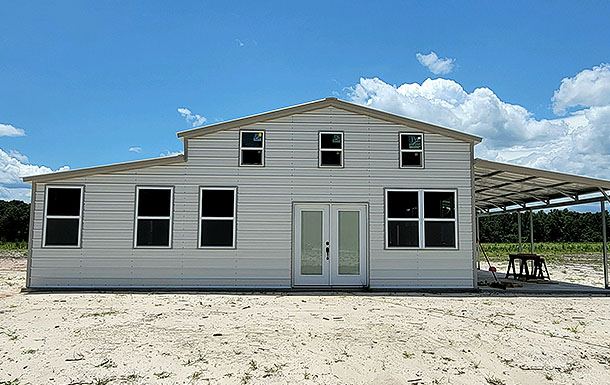
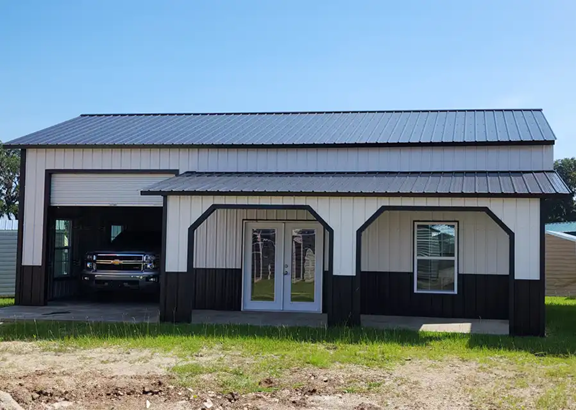
    Tubular Buildings are growing in usage as garages with living quarter or Barndominiums, or “barndos”. These buildings are hybrid metal structures that combine living quarters with a shop, barn, or large garage under one roof, giving many people the best of both worlds. Typically built with steel frames, metal siding, and open floor plans, they offer both modern living spaces and functional work areas. The concept, popular in agricultural settings, has now become a mainstream housing solution for families, retirees.

    According to the National Association of Home Builders (NAHB), as of early 2024, roughly 7% of U.S. homebuilders have constructed a barndominium within the past year – a sharp rise from previous years. Originally popular in Texas and the Midwest, steel buildings and garages with living quarters are now gaining momentum across the Southeastern United States, where rural land availability and rising housing costs have made them especially attractive.

    Housing Affordability and Construction Costs: Why Americans Are Switching

    The affordability crisis in U.S. housing has accelerated the search for cost-effective building methods. By the end of 2023, median home prices exceeded $375,000 nationally, while 30-year mortgage rates hovered near 7%, pushing affordability to its lowest point in more than a decade. Only about 37% of American households could afford a median-priced home according to NAHB’s Housing Opportunity Index.

    Meanwhile, traditional construction costs have also surged due to lumber inflation, labor shortages, and supply-chain volatility. A standard stick-built home in 2024 averages between $150-$250 per sq. ft., with higher-end custom builds easily surpassing $300-$450 per sq. ft.

    Metal buildings present a viable workaround to this cost squeeze. Because they rely on pre-engineered framing systems and streamlined construction, the total build cost per square foot is dramatically lower – even when finished to modern residential standards.

    Cost Comparison: Tubular Steel Homes vs. Traditional Homes

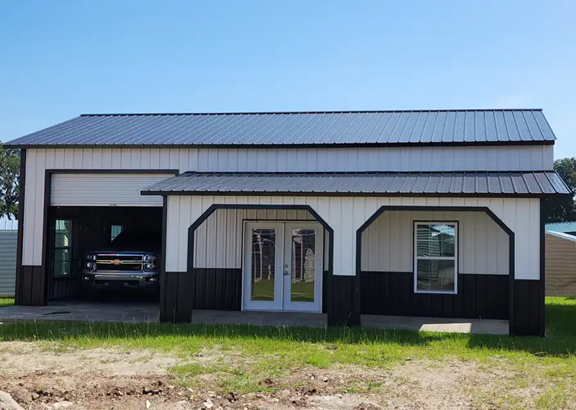
    A building with a car parked in the garageAI-generated content may be incorrect.

    Completed Metal Building Homes/Barndos: ~$65-$160 per sq. ft. (standard), up to $150-$300 for high-end custom or shop-combo.
    Traditional Stick-Built Homes: ~$100-$200 per sq. ft. average, $150-$250+ for custom homes, and $300-$450+ for premium builds.

    Metal building homes save roughly 20-30% compared with comparable conventional homes. Savings stem from lower framing costs, faster build cycles, and reduced finishing complexity.

    Building Approaches: Contractor-Built, DIY, and Shell-Plus-Interior Models

    A major appeal of metal buildings is construction flexibility. Buyers can choose between turnkey contractor-built barndominiums, DIY-assisted builds using prefab kits, or hybrid ‘shell + DIY interior’ models, where a professional installs the exterior and the homeowner finishes inside.

    Prefabricated kits for metal garage homes include the steel frame, siding, roof panels, and hardware, often pre-cut and pre-drilled for quick assembly. Owners with basic construction knowledge can erect the structure themselves or with a small hired crew, then complete insulation, drywall, flooring, and fixtures at their own pace. This model has made homeownership accessible to thousands who can’t afford full general-contractor builds.

    Tubular Steel House Shells: Built in Days, Not Months

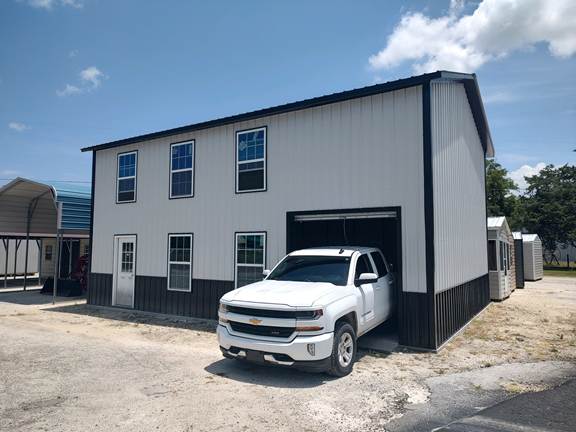
    Unlike traditional wood or pole-frame buildings that may require months of framing, drying-in, and inspection cycles, tubular steel building shells can be completed within days. Once the slab foundation cures, crews can assemble a 30×40 or 40×60 steel-tube shell in as little as two to four days, achieving a weather-tight structure almost immediately. Even larger models – up to 50×100 – can often reach dried-in status within a week.

    Because the components are factory-engineered for rapid bolt-together installation, labor costs are significantly reduced, timelines shrink dramatically, and exposure to weather delays is minimized. Many Southeastern builders now market weekend “rapid-set” packages where families see their dream structure standing within one extended workweek. This speed advantage gives tubular metal buildings a decisive edge over both pole-barn and stick-built methods.

    A truck parked in a garageAI-generated content may be incorrect.

    Advantages of Metal Building Homes

    Beyond affordability, metal building homes offer a slate of practical benefits that appeal to homeowners looking for value and resilience:

    • Rapid Construction Timeline: Pre-engineered tubular steel shells can be completed in days, not months. A typical steel-tube frame system arrives pre-fabricated and bolts together quickly, requiring smaller crews and less heavy equipment than conventional framing. This fast assembly shortens project timelines, minimizes exposure to weather delays, and allows families to move from foundation to dried-in structure in under a week-an enormous advantage for DIY builders or anyone eager to move in sooner. This not only saves time but also reduces labor costs and exposure to weather interruptions during construction.

    • Durability and Low Maintenance: Steel-framed structures are exceptionally durable. They resist issues that plague wood construction – no worrying about termites, rot, or mold in the framing. Metal roofs and siding often last decades with minimal upkeep (no repainting siding every few years or replacing shingles as frequently). In regions with harsh weather, a properly engineered metal building can withstand high winds and heavy storms better than some traditional homes. For example, in hurricane-prone or tornado-prone areas of the Southeast, the strength of steel framing and metal cladding is a major selling point. These homes are built with rigid steel that can handle strong forces, and they won’t ignite or burn like wood in a fire scenario – potentially offering greater safety.

    • Energy Efficiency Potential: While a basic metal building could be inefficient if poorly insulated, steel buildings today are usually built with modern insulation and can be very energy-efficient. Spray-foam insulation is commonly used to coat the interior of the metal walls and roof, creating a tight envelope that keeps indoor temperatures stable. Owners have reported that with proper insulation and windows, their steel homes are comfortable year-round and cheaper to heat/cool than older conventional homes. The large roof surface also lends itself to easy installation of solar panels, and many barndos and habitable metal buildings incorporate energy-efficient appliances and lighting. Over the long term, lower maintenance and utility costs further reduce the total cost of ownership for metal homes.

    • Flexibility and Customization: Metal buildings and garages are highly flexible in design. The interior is basically a blank canvas inside a clear-span shell – meaning few structural interior walls. This allows open-concept layouts with soaring ceilings, or the ability to reconfigure spaces as needs change. Homeowners can finish the interior to whatever style they like, from rustic farmhouse charm to sleek modern aesthetics. Many builders note that you can include all the amenities of a traditional home (gourmet kitchens, marble bathrooms, custom cabinetry) or keep it simple and industrial – it’s up to the owner’s budget and taste. The wide-open floor plans and tall barn-like vaults create a spacious feel that people love. Additionally, because these structures are often built on larger rural lots, it’s relatively easy to expand later – you can extend the metal building or add lean-tos for more covered area, etc., more readily than adding to a brick house.

    • Multi-Purpose Living (Workshop + Home): A signature advantage of steel buildings is the ability to combine living space with substantial work or storage space. Many designs include an oversized garage, a workshop, or even stables for animals as part of the footprint. For individuals who need to store farm equipment, operate a home business, do auto repair, or pursue serious hobbies, this setup is ideal. Instead of a separate house and detached shop, everything is under one roof for efficiency. According to builders, this multi-functionality is a top selling point – homeowners get a residence plus usable work areas without the cost of building a separate structure. For example, car enthusiasts can have a large garage for multiple vehicles, artisans can have a studio, and remote workers can have a dedicated office or even warehouse space on-site. The COVID-19 era shift toward work-from-home and home-based entrepreneurship has only increased demand for such integrated living quarters with workspaces. Metal buildings that offer garages with living quarters fulfill that demand perfectly, offering ample room for both living and productive activities in one affordable package.

    • Rural Lifestyle and Space: Especially in the South and Midwest, many buyers are drawn to the rural lifestyle that tubular buildings support. Since these affordable homes are easiest to build on unrestricted land outside city limits, owners often enjoy several acres of space – perfect for gardening, raising animals, or just having privacy and peace. These homes allow people to design a lifestyle that includes large porches, backyard chickens, workshops, and wide-open country views, all at a price often lower than a suburban house on a tiny lot. In short, metal building homes provide affordable freedom: freedom to use your property as you wish, to spread out, and to craft a unique home that doesn’t look like every other house in a subdivision.

    • Addressing the Affordability Crisis: From a broader perspective, the rise of metal garages with living quarters and tubular steel barndominiums hints at an innovative way to help solve housing affordability issues. By leveraging cheaper materials and land, these structures make homeownership accessible to some who would be priced out of the conventional market. Industry commentators note that metal barndos are an “accessible option for a growing number of potential homeowners”, promoting a more inclusive housing market at a time when traditional home costs exclude many buyers. While not a solution for everyone (urban areas with strict codes may not allow them readily), they are clearly filling a niche for affordable, high-value housing in many parts of the country.

    Southeastern U.S. Focus: Why the Trend Is Accelerating

    The Southeast’s landscape perfectly suits metal-building living. Land is more affordable, zoning is more flexible, and DIY culture thrives. Steel buildings outperform wood in the humid, hurricane-prone climate, and the rustic-farmhouse aesthetic fits Southern tastes. From Alabama and Florida to Georgia, Tennessee, and the Carolinas, builders are reporting exponential demand for affordable and stylish habitable building solutions. We even see existing outdoor metal garages converted into homes.

    Real Americans Building Smarter

    Bernie and Tina Fox – Sanford, NC: Built a 1,500 sq ft home + 1,500 sq ft garage. Entire shell erected in under two weeks for far less than a suburban home. ‘It’s my dream house – and more importantly, it was attainable.’

    Alabama Families: Retirees and young families building affordable garage homes with living quarters + RV garage combos, saving tens of thousands vs. traditional homes.

    Rural Entrepreneurs: In Georgia and Florida, garages with living quarters double as live-work spaces for tradesmen, artisans, and small business owners.

    The Affordable American Dream

    As housing prices soar, Americans are redefining homeownership. Tubular steel structures and metal buildings offer affordability, durability, and creative freedom unmatched by traditional methods. With tubular shells capable of being erected in mere days, the future of attainable housing in America may very well be clad in steel.

    About Keen’s Buildings

    Founded in 1999 and headquartered in Live Oak, Florida, Keen’s Buildings (https://keensbuildings.com/) is a leading provider of steel buildings, metal garages, carports, barns, and portable storage solutions across the Southeastern United States. With multiple retail locations and a commitment to quality, speed of delivery, and customer service, Keen’s Buildings offers durable, customizable structures for residential, commercial, and agricultural needs. Follow Keen’s @keensbuildings2201 on YouTube, keensbuildings on facebook, and Keens.Buildings on Instagram.

    Media Contact:
    Keen’s Buildings | Craig Heineman – Director of Marketing | 386‑339‑1676 | craigh@keensbuildings.com

    SOURCE: Keen’s Buildings

    View the original press release on ACCESS Newswire
  • Claytor Noone Plastic Surgery Adds New Skincare Line to Treatment Options

    Claytor Noone Plastic Surgery Adds New Skincare Line to Treatment Options

    BRYN MAWR, PA – November 10, 2025 – PRESSADVANTAGE –

    Claytor Noone Plastic Surgery announced the addition of Hydrinity Accelerated Skin Science to its medical-grade skincare offerings. The Philadelphia-area practice made the announcement as part of its expansion of post-treatment care options for surgical and non-surgical patients.

    Hydrinity Accelerated Skin Science utilizes proprietary hyaluronic acid technology with specialized delivery systems. The brand originated from regenerative medicine research and focuses on formulations designed to accelerate skin recovery and reduce post-procedure inflammation.

    Dr. R. Brannon Claytor, board-certified plastic surgeon and Chief of Plastic Surgery at Main Line Health, said the practice selected Hydrinity based on clinical data supporting its use in sensitive skin conditions. “The formulations show measurable results in barrier function restoration, which is particularly relevant for patients recovering from aesthetic procedures,” Claytor stated.

    The skincare line joins existing medical-grade brands currently offered at the practice, including Valmont, Alastin, and ISDIN. According to practice representatives, the addition allows for more targeted product recommendations based on individual patient needs and recovery requirements.

    Claytor noted a shift in patient preferences toward more natural-appearing results and overall skin health. “We’re seeing increased requests from patients who want to feel confident without makeup,” he said. “Many are specifically asking for treatments and products that improve their skin quality to the point where they feel comfortable going makeup-free in their daily lives.”

    Industry data indicates Hydrinity is currently distributed through approximately 2,500 professional practices nationwide. The brand has reported significant growth within the professional skincare market over the past two years, according to published industry reports.

    The announcement comes amid broader trends in aesthetic medicine toward comprehensive care approaches that combine surgical interventions with medical-grade skincare protocols. Recent consumer surveys indicate increased interest in professional-grade products that support natural skin appearance without heavy cosmetic application.

    “The integration of medical-grade skincare with our surgical and non-surgical treatments represents a significant evolution in patient care,” Claytor explained. “We’re finding that patients who maintain consistent professional skincare regimens often experience enhanced healing, improved long-term results, and greater satisfaction with their overall aesthetic outcomes. This holistic approach addresses not just immediate concerns but supports ongoing skin health.”

    Claytor Noone Plastic Surgery operates from Bryn Mawr, Pennsylvania, serving the greater Philadelphia metropolitan area. The practice specializes in facial and body contouring procedures, with additional non-surgical treatment options available through its medical spa division.

    The practice’s licensed medical aesthetician conducts skincare consultations to determine appropriate product selections for individual patients. Treatment plans may incorporate multiple product lines depending on specific skin conditions and recovery timelines.

    Claytor noted that patient interest in achieving natural-looking results has influenced both surgical technique preferences and post-treatment care protocols. “We’re seeing more requests for approaches that enhance rather than dramatically alter appearance,” he said. “We’ve also found that patients who stick to their post-surgical skincare routines are consistently happier with their results and maintain their improvements longer.”

    The Hydrinity product line will be available to current and new patients following consultation with the practices’ skincare specialists. Information about available treatments and products can be obtained through the practice’s website or by scheduling a consultation.

    About Claytor Noone Plastic Surgery

    Claytor Noone Plastic Surgery is a leading aesthetic surgery practice serving the Philadelphia metropolitan area from its Bryn Mawr location. Led by Dr. R. Brannon Claytor, a double board-certified plastic surgeon and Chief of Plastic Surgery at Main Line Health, the practice specializes in advanced surgical techniques including deep plane facelifts and drain-free tummy tucks. The practice combines surgical expertise with comprehensive non-surgical treatments and medical-grade skincare through its on-site medical spa. Claytor Noone Plastic Surgery is located at 135 S Bryn Mawr Ave Suite 300, Bryn Mawr, PA 19010. For more information about skincare consultations, call 610-527-4833 or visit their website.

    ###

    For more information about Claytor Noone Plastic Surgery, contact the company here:

    Claytor Noone Plastic Surgery
    Dr. R. Brannon Claytor
    (610) 527-4833
    info@cnplasticsurgery.com
    135 S Bryn Mawr Ave Suite 300, Bryn Mawr, PA 19010

  • Click Media Launches Strategic Law Firm Marketing Initiative for Covington, LA Attorneys

    Click Media Launches Strategic Law Firm Marketing Initiative for Covington, LA Attorneys

    Digital-first agency seeks to elevate local legal practices through expert law firm marketing, website redesign, SEO, and digital partnerships.

    COVINGTON, LA / ACCESS Newswire / November 11, 2025 / Click Media, a premier digital-first agency based in Covington, Louisiana, today announced the launch of a new strategic partnership initiative. The agency is now actively seeking and accepting applications from growth-oriented law firms within the Covington and greater St. Tammany Parish area for comprehensive website redesign, search engine optimization (SEO), and full-funnel digital marketing services, specializing in the legal sector.

    This initiative is designed to connect ambitious legal practices with Click Media’s expert team to build dominant online presences, attract qualified client leads, and significantly expand their digital reach. As a digital-first agency, Click Media specializes in creating bespoke strategies, from initial web design to ongoing law firm marketing, that align directly with a firm’s growth objectives.

    “The legal landscape is more competitive than ever, and a firm’s digital presence is no longer just a billboard-it’s their primary driver of new business,” said – Emily from Click Media – at Click Media. “We are not looking for clients; we are looking for partners. We are seeking firms in the Covington area who are serious about growth and ready to leverage sophisticated law firm marketing strategies to achieve measurable results and outpace their competition.”

    The partnership program offers a suite of integrated services, including

    Bespoke Website Redesign: Developing modern, professional, and mobile-first websites optimized for client conversion and user experience.

    Advanced SEO for Lawyers: Implementing data-driven SEO strategies focused on capturing high-intent search traffic for lucrative practice areas, enhancing local visibility, and building long-term authority.

    Comprehensive Law Firm Marketing: Executing targeted digital marketing campaigns across multiple channels, including paid search (PPC), content marketing, and social media strategies designed to nurture leads and build brand recognition for legal practices.

    Click Media is specifically looking for law firms that view digital and law firm marketing as a critical investment in their long-term success. The agency’s approach focuses on transparency, detailed reporting, and a deep understanding of the unique marketing challenges and ethical considerations within the legal industry.

    About Click Media Click Media is a Covington, Louisiana-based digital-first marketing agency specializing in helping local businesses expand their reach and achieve sustainable growth. With a focus on data-driven strategies and measurable outcomes, Click Media provides a full suite of services, including web design, SEO, and comprehensive law firm marketing and digital advertising solutions.

    Law firms interested in learning more about this partnership opportunity are encouraged to visit www.click.media

    or contact the new business development team directly.

    Contact Information

    Emily Blocker
    Public Relations
    emily@click.media
    (985) 200-8888

    Taylor McLain
    Public Relations
    taylor@click.media
    (504) 225-2222

    .

    SOURCE: Click Media

    View the original press release on ACCESS Newswire